Understanding Your LPG Cylinder: How It Works and Stays Safe in Queensland
Understanding Your LPG Cylinder
LPG cylinders are designed to operate safely in Australian conditions — including Queensland’s heat. Understanding how your cylinder works and how it manages the Queensland environment can give you peace of mind and ensure safe use at your home or business.
How LPG Cylinders Are Filled
Filling by Scales
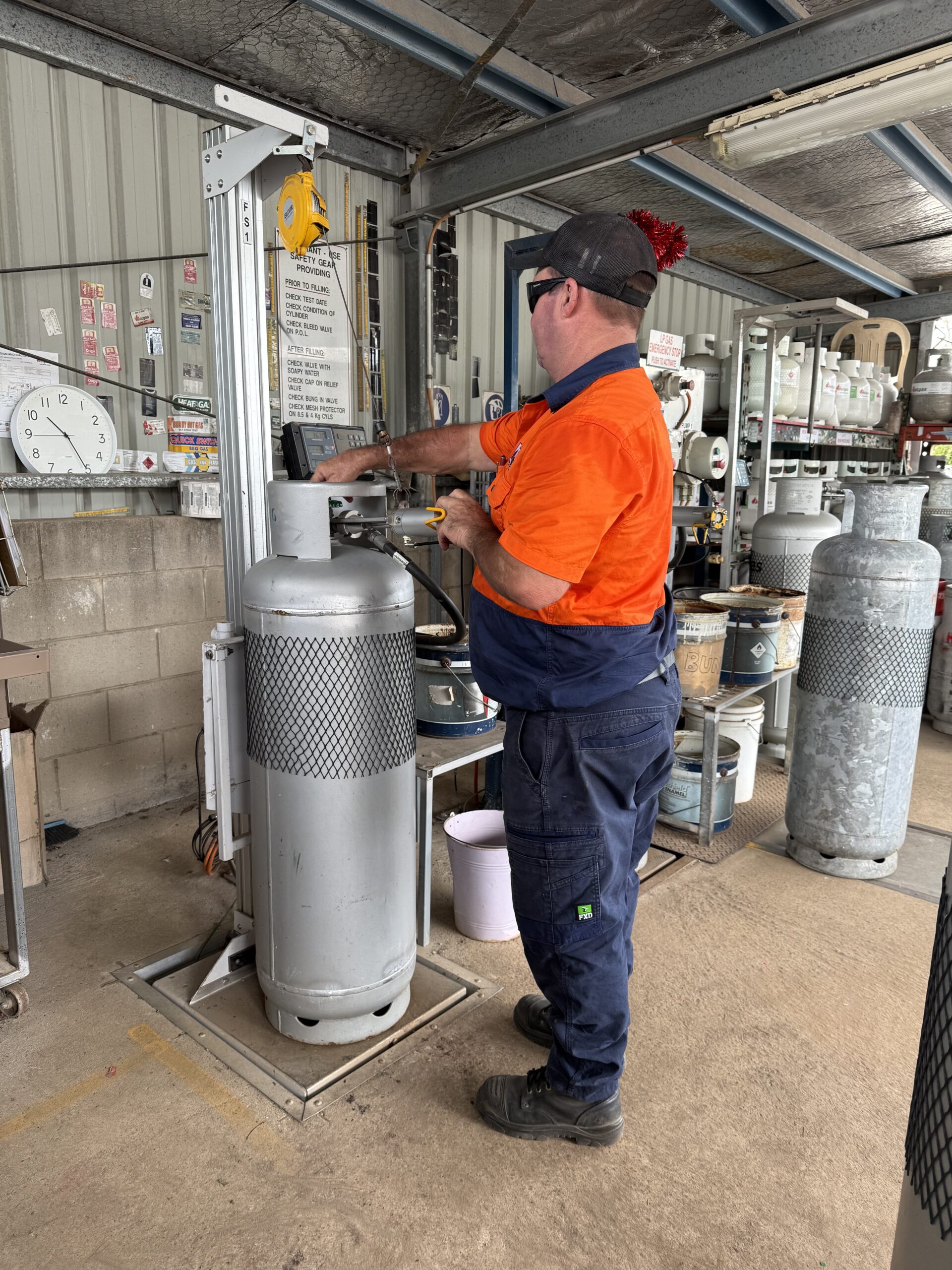
Most cylinders are filled using electronic weighing equipment to ensure accuracy and safety. During this process:
- The cylinder is placed on an electronic scale
- The system calculates the tare weight (the weight of the empty cylinder and valve)
- LPG is added only up to the safe fill level — for example, 45kg for a 45kg cylinder (or the applicable size)
Cylinders are never filled completely. Around 20% of the cylinder is left as vapour space, allowing the LPG to safely expand when temperatures rise, such as during hot weather or when the cylinder is exposed to direct sunlight.
Filling by Decant
Cylinders can also be filled by decanting from another cylinder, also called filling by ullage. This method is only suitable for cylinders with a bleeder valve, such as camping, BBQ, and forklift cylinders.
During decanting:
- The dip tube inside the cylinder determines the fill level
- When the cylinder reaches 80% full, liquid reaches the dip tube, and excess gas vents via the bleeder valve, indicating the cylinder is full
Important: Decanting should only be performed by trained and competent personnel.
How LPG Behaves Inside the Cylinder
LPG is stored under pressure. When compressed, LPG becomes a liquid and settles at the bottom of the cylinder due to gravity.
When gas is drawn from the cylinder:
- Pressure drops
- The liquid LPG turns into vapour and expands significantly — up to 270 times its liquid volume
This process allows LPG to flow through your appliances as a gas and is why correct filling levels, vapour space, and safety features are so important, particularly in Queensland’s warm conditions.
Heat, Expansion and Built-In Safety
Every LPG cylinder is fitted with a Safety Relief Valve (SRV).
- The SRV automatically vents gas if internal pressure becomes too high due to heat and expansion
- For the SRV to function correctly, the cylinder must always be stored upright
- Venting may be concerning to observe, but it shows the cylinder is operating as designed to prevent a serious safety incident
The SRV has a cap fitted (red plug) that protects the valve and helps ensure the cylinder can operate safely. It’s designed to prevent foreign matters such as dirt or insects (e.g. mud wasps) from entering the valve and compromising it.
If the Safety Relief Valve (SRV) Cap Has Been Dislodged or is missing
In some cases, pressure venting can cause the SRV cap to be pushed off.
Alternatively, Queensland’s climate can cause SRV caps to become brittle over time due to prolonged heat and weather exposure.
If you notice that the cap is missing, and you are concerned please contact Hotgas (or your supplier) to discuss. To help reduce the risk of damage, we may fit an additional protective cap.
Your Safety Comes First
LPG cylinders are robust, well-engineered, and designed for long-term use. However, regular checks, correct installation, and safe handling are essential.
If you notice:
- A missing SRV cap
- Any damage to your cylinder
- Any other concerns
please contact Hotgas to discuss with our team.
Understanding how your LPG cylinder works is one more way to keep your home or business safe.
For safety tips on LPG cylinders during extreme weather, see our blog: Preparing Your LPG Cylinders for Weather Events.